
Canada’s Tallest Trees: A Complete Travel Guide to the Giants of the Forest
When most travelers dream of the world’s tallest trees, their minds instantly wander to California’s legendary redwoods. But hidden in the misty rainforests of British Columbia, Canada’s tallest trees stand proudly — towering Sitka spruces, massive Douglas firs, and ancient cedars that rival the giants of the south.
Visiting these trees is more than a walk in the woods: it’s a journey into one of the rarest ecosystems on Earth, where age-old forests meet rugged coastlines and the air is thick with the scent of cedar and ocean spray. This guide will take you to the best places in Canada to stand beneath the tallest trees, explaining what makes them special and how to experience them responsibly.
🌍 Where Canada’s Tallest Trees Grow
Canada’s record-breaking trees are concentrated in coastal British Columbia, especially on Vancouver Island. This region forms part of the Great Bear Rainforest and the temperate coastal rainforests, one of the rarest forest ecosystems in the world.
What makes them grow so large?
- Mild climate: Winters are wet but not too cold.
- Heavy rainfall: More than 3,000 mm (120 inches) per year in some valleys.
- Rich soils: Fed by centuries of fallen trees, moss, and ocean nutrients.
Together, these conditions allow Sitka spruce, Douglas fir, and western red cedar to reach breathtaking sizes.
🌲 Canada’s Giants: Trees You Must See
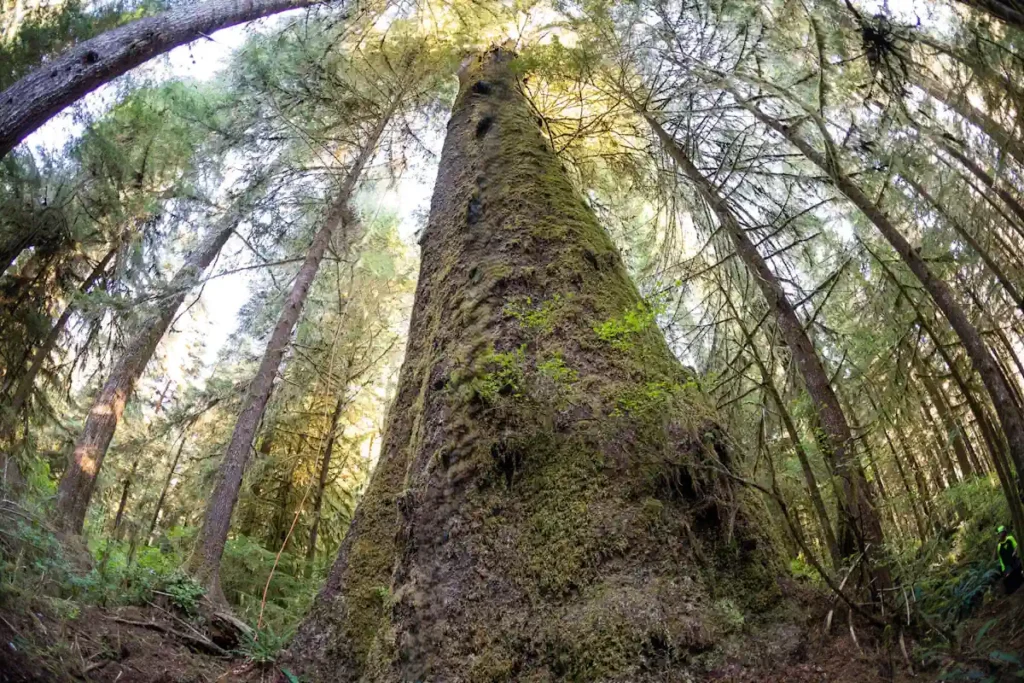
1. The Carmanah Giant – Tallest Tree in Canada
- Species: Sitka Spruce
- Height: ~95 m (312 ft)
- Location: Carmanah Walbran Provincial Park, southwestern Vancouver Island
- Travel Tip: A rugged trail leads you into an ancient rainforest where moss carpets the ground and shafts of light cut through the canopy. Visiting requires effort, but the reward is standing beneath Canada’s tallest known tree.
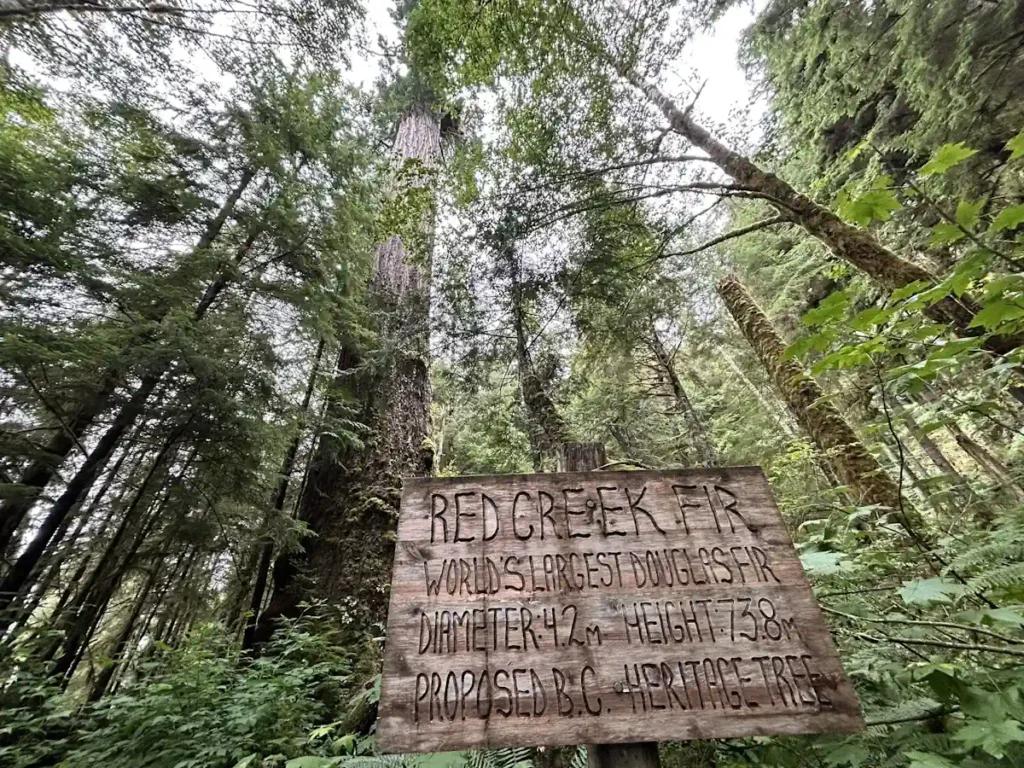
2. Red Creek Fir – The World’s Largest Douglas Fir
- Height: ~73 m (240 ft)
- Diameter: 4.2 m (14 ft)
- Location: Near Port Renfrew, Vancouver Island
- Why Go: This giant is the largest Douglas fir ever recorded on Earth. The tree towers above visitors like a cathedral pillar, its bark thick and deeply furrowed.
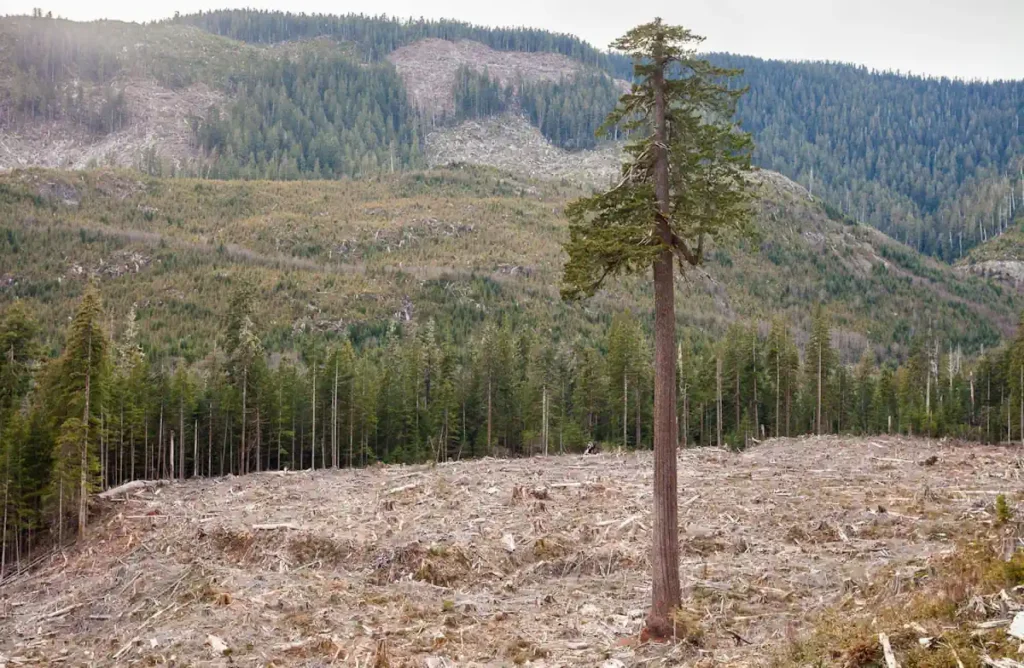
3. Big Lonely Doug – A Monument to Conservation
- Height: ~70 m (230 ft)
- Diameter: 4 m (13 ft)
- Location: Gordon River Valley, a short drive from Port Renfrew
- Story: In 2012, a logger spared this single Douglas fir while the surrounding forest was clear-cut. Today, it stands alone in an empty valley — a haunting and powerful reminder of what’s at stake in the fight to protect old-growth forests.
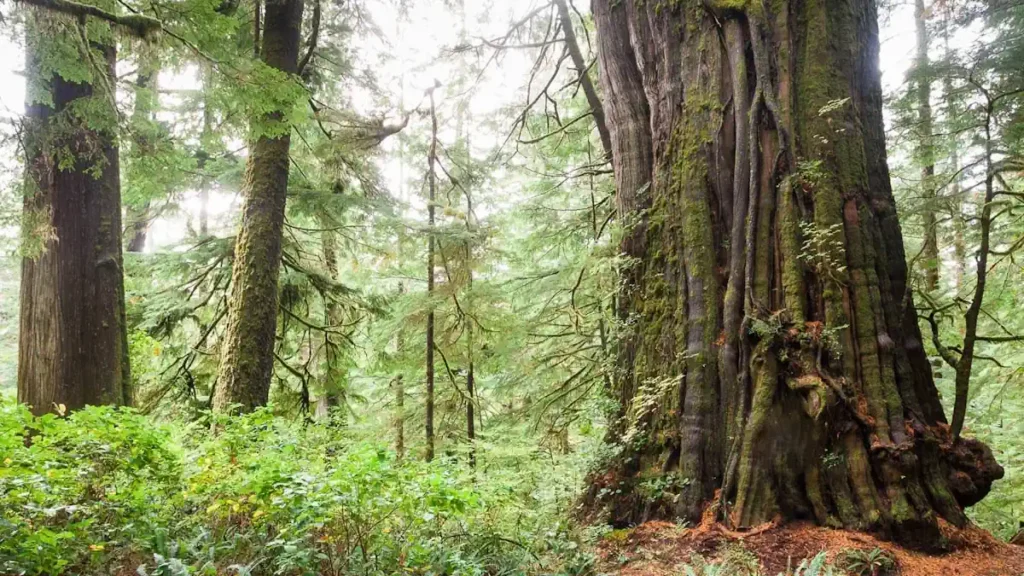
4. Cheewhat Giant – Largest Tree in Canada by Volume
- Height: ~56 m (184 ft)
- Diameter: 6 m (20 ft)
- Wood Volume: 450 m³ (about 10 full logging trucks)
- Location: Pacific Rim National Park Reserve, near Nitinat Lake
- Travel Tip: The hike to this tree is long and muddy but unforgettable. Wear waterproof boots and be prepared for a true rainforest adventure.
5. Ancient Cedars of Vancouver Island
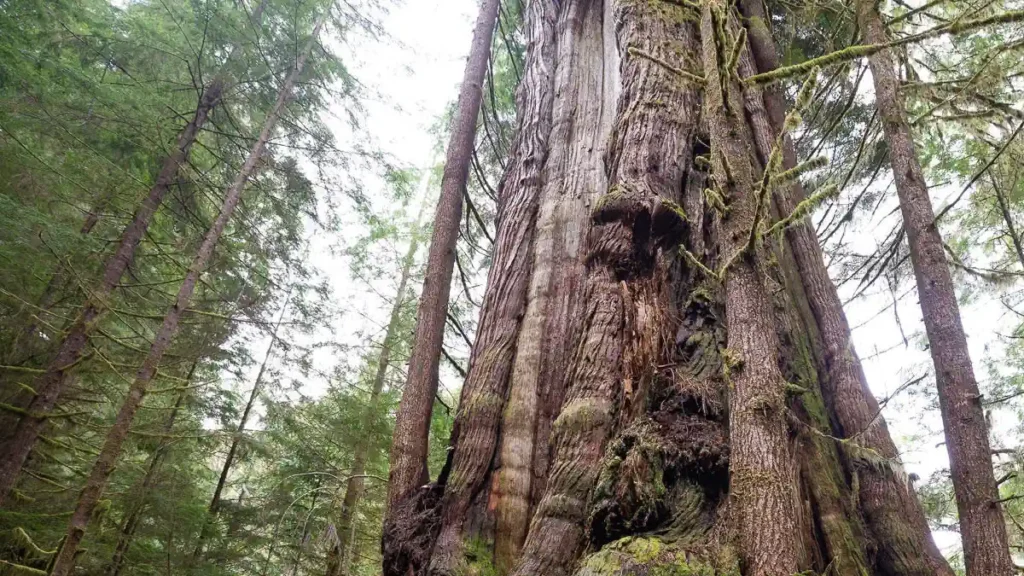
- While Sitka spruces and Douglas firs take the height records, western red cedars hold their own for age and mass. Some are over 1,000 years old, with twisting roots and massive hollow trunks you can step inside.
- Best places to see them:
- Cathedral Grove (MacMillan Provincial Park) — easily accessible, with trails among 800-year-old giants.
- Meares Island, Tofino — home to the “Hanging Garden Tree,” a cedar estimated to be 1,500 years old.
📍 How to Visit
Best Base Towns
- Port Renfrew: Known as the “Tall Tree Capital of Canada.” A small village with access to Red Creek Fir, Big Lonely Doug, and Avatar Grove.
- Tofino & Ucluelet: Perfect for combining beach adventures with old-growth forest walks (Cathedral Grove, Meares Island).
- Victoria: British Columbia’s capital city, about 2.5 hours from Port Renfrew, with more services and accommodations.
When to Go
- Spring to Early Fall (May–October): Trails are more accessible, and ferry/weather conditions are easier.
- Winter: Magical in its own way — misty, mossy, and moody — but many trails are muddy or washed out.
Getting There
- Vancouver Island is reached by ferry from Vancouver (about 2 hours) or by direct flight into Victoria or Nanaimo.
- A car is essential for exploring the forests. Roads to some trees are unpaved, so drive carefully.
🥾 Hiking & Accessibility
- Carmanah Walbran Provincial Park: Remote, rugged trails. For experienced hikers only.
- Red Creek Fir & Big Lonely Doug: Gravel roads lead close to the trees; short hikes required.
- Cathedral Grove: Easy, wheelchair-accessible boardwalk trails.
- Meares Island: Accessible by water taxi from Tofino; guided eco-tours available.
🌿 Responsible Travel & Conservation
These trees are living monuments, many over 1,000 years old. To help protect them:
- Stay on marked trails to avoid damaging roots.
- Do not carve into bark or remove pieces of wood.
- Support local conservation groups like the Ancient Forest Alliance.
- Learn the Indigenous history of these forests: for First Nations communities, these trees are sacred.
✨ Final Thoughts
Standing beneath Canada’s tallest trees is an awe-inspiring experience that rivals gazing at the redwoods of California. While Canada’s giants may not quite reach the record-breaking heights of the redwoods, they are among the tallest trees outside California — and they grow in one of the most beautiful, wild landscapes on Earth.
For travelers, visiting them is both a journey into nature and a reminder of what must be preserved. Because once an ancient tree is gone, it can never be replaced in a human lifetime.
So pack your boots, respect the forest, and get ready to meet the giants of Canada.


